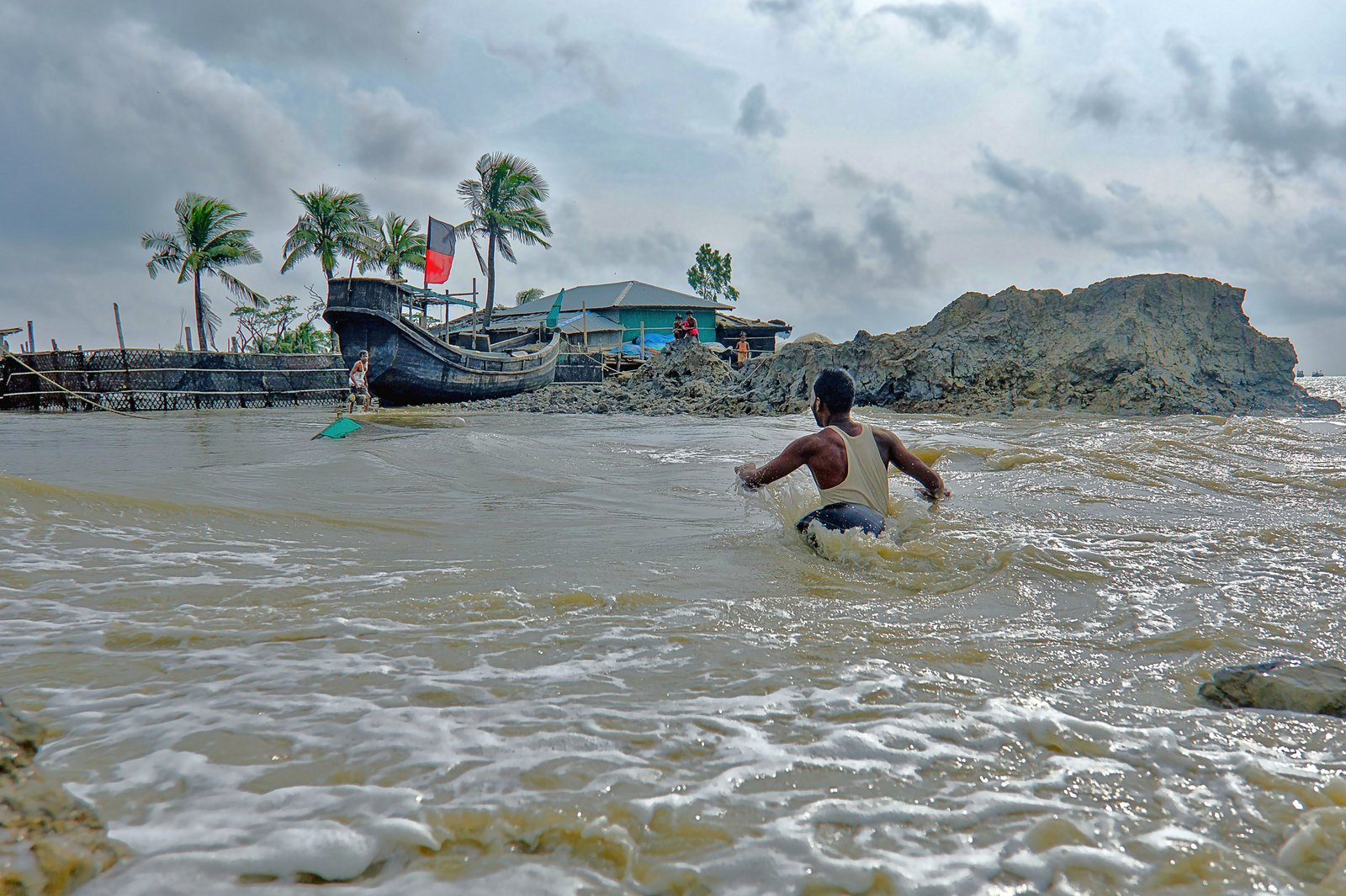
Climate disasters can undo years of development efforts in the blink of eye, intensifying existing social, economic and environmental challenges. Cyclone Ditwah, which hit Sri Lanka and Southern India in December 2025, shows how gaps in development planning amplified disaster impacts and slowed recovery efforts. Strengthening development planning is an urgent pre-requisite for risk-informed development, ensuring sustainable growth for emerging economies.
Despite ongoing efforts by governments and international climate organizations, disaster risks continue to grow. For example, the Indian Ocean is experiencing the fastest rate of sea-surface warming among the world’s tropical oceans, and this is contributing to extreme weather events across South Asia. Climate inaction is dialling up future disaster risks.
The macroeconomic consequences of natural disasters like hurricanes and earthquakes are larger for developing economies than for advanced economies. In the aftermath of such an event, government spending tends to rise. In advanced economies, this can offset the long-run negative effects on output growth caused by the disaster. In contrast, as the increase in government spending is smaller in developing countries, the negative effect on output growth is not fully offset, resulting in constrained growth in the long run.
Indeed, a study by the World Bank shows that after a disaster, low-income countries take 56% longer to recover their consumption than high-income countries. As well as affecting the well-being of households, such declines in consumption also hamper economic activity. In Sri Lanka, for example, Cyclone Ditwah increased annual average disaster relief spending from 0.4% of GDP to 4% of GDP in 2025-26.
Pre-existing country-level characteristics also play a crucial role in disaster impact mitigation. In Sri Lanka, heavy debt obligations, market inefficiencies, and the scarring effects of the recent economic crisis may limit the country’s ability to fully offset the negative impacts of natural disasters on output growth.
Development is closely connected to disasters. In fact, disasters and development influence each other. While disasters can undermine development gains, failures in development planning can also increase disaster risks. This means that a significant share of disaster costs is avoidable through risk-informed development policies. For example, countries with high disaster exposure risks like Japan, China and South Korea have significantly reduced their high disaster vulnerability by integrating risk management into development strategies.
Even so, the persistent disconnect between planning priorities and budgetary allocations remains a major problem, weakening the capacity for risk management within developing economies. Addressing these gaps is critical for disaster risk-informed development.
Strengthening development planning
In this context, planning is the systematic process of choosing among feasible investments based on the socio-economic costs and benefits. A ‘development plan’ provides the basis and justification for planning policies in a country. Despite frequent setbacks, planning has been key to development in many countries. A country can develop with or without a plan, but having a clear strategy helps achieve better development outcomes. Perhaps unsurprisingly, the number of countries with national development plans more than doubled over the past few years, rising from 62 in 2006 to 134 by 2018.
Of course, development planning needs to align with a country’s actual capacity, taking into account factors like political will, economic potential, and administrative capability. Political will is of prime importance for policy continuity. Planning should combine both ‘top-down’ and ‘bottom-up’ approaches, although the latter is rarely evident.
Scale and scope are also important. Setting overly ambitious targets beyond a country’s administrative and political capacities often results in unfinished projects, increased costs, and extended timelines. It is also important that plan formulation not be separated from implementation. Well-planned individual projects that contribute to the realization of a country’s wider development vision are essential.
A workable approach for disaster-vulnerable economies: lessons from Sri Lanka
Sri Lanka offers several insights into planning and development for disaster vulnerable countries. First, policymakers should formulate medium-term development plans comprising risk informed future-ready projects. The International Monetary Fund’s Governance Diagnostic Assessment (2023) states that Sri Lanka’s expenditure planning lacks discipline, as large adjustments to the budget were made prior to approval by Parliament, without adequate analysis of costs, benefits, or feasibility.
Worse still, significant issues regarding both governance and corruption persist across all stages of public investment management. These include unrealistic spending ceilings in the public investment programme as well as weak project appraisal, leading to low-quality project selection. On top of this, the mismatch between development planning and physical planning increases disaster risks. For instance, Cyclone Ditwah hit the hill country hardest, where unplanned development is common.
Countries can learn from Sri Lanka and formulate medium-term development plans, comprising projects selected through rigorous, risk-informed, and scientific appraisal mechanisms. Crucially, they should then translate them into the annual capital budget.
Second, policymakers must find ways to strengthen coordination among government departments for better public financial management. Sri Lanka’s public financial management requires significant improvements. The country’s public investment programme is not constrained by fiscal space, does not include prioritized projects, and is not clearly linked to the annual budget or monitoring and evaluation. This leads to resource misuse and project duplication.
For example, despite escalating climate risks, direct budget allocations for climate action remain below 1% of GDP. Stronger coordination among government departments is needed to support risk-informed development.
Risk-informed development requires continuous capacity development in policy, administrative, and organizational levels. Further, better data, well-trained staff, and stronger cooperation across ministries can enhance planning effectiveness. Thus, strengthening capacity in medium-term fiscal and development planning, including incorporating risk modelling into development planning are vital.
The way forward
Reconstruction efforts in disaster-affected countries should be forward-looking, going beyond the simple replacement of damaged infrastructure. Accordingly, the focus should be on prioritizing risk-informed development that enhances climate readiness and addresses long-overdue structural reforms in developing countries.
Climate action is more cost-effective than inaction. Policymakers should look to Sri Lanka’s experience during Cyclone Ditwah and reinstate long-term, risk-informed national development. Such frameworks should include the application of rigorous scientific project appraisals, strengthened institutional coordination, and integrated national and physical planning to reduce disaster vulnerability.