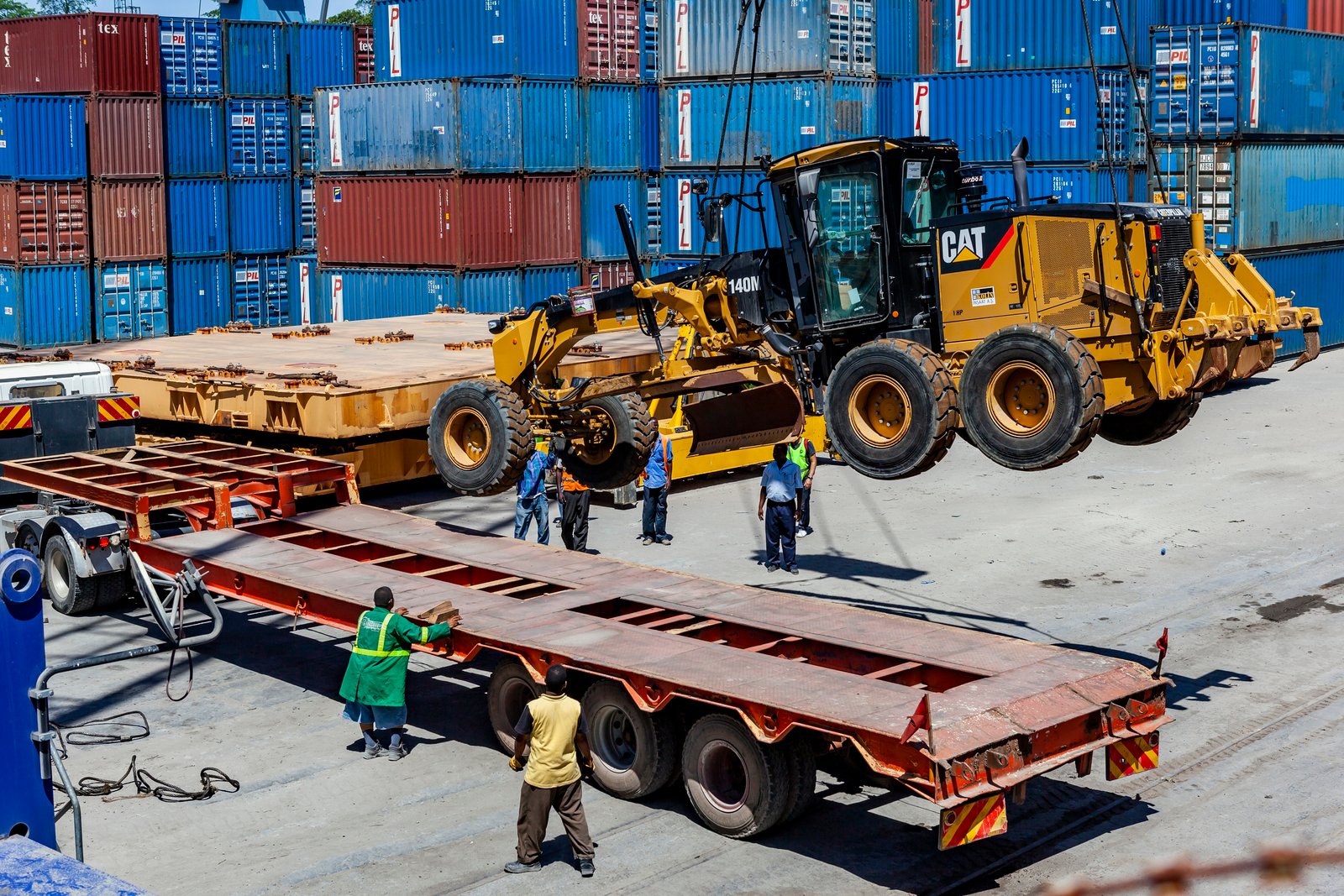
Ensuring that technological upgrading expands, rather than narrows, economic opportunity requires policies that help workers transition into jobs that complement new technologies, including through skills development, retraining, and labor market support.
In China, this challenge is becoming more urgent as workers in machine-replaceable jobs face declining economic prospects regardless of family socioeconomic background. Our research shows that susceptibility to automation is now a more powerful predictor of a worker’s economic future than their family background.
For much of the twentieth century, routine industrial and clerical jobs were widely seen as a reliable pathway to upward mobility, offering stable wages and predictable career trajectories. In many economies, these jobs enabled families to move into the middle class within a generation
However, as automation spreads across economies, many routine tasks once performed by workers are increasingly carried out by machines. Our research finds that this shift is already well underway in China as assembly lines, industrial robots, and automated workflows reshape the nature of work.
The routine-task intensity of Chinese jobs has fallen for over 20 years, meaning that many of the tasks most vulnerable to automation have already been automated. While this has contributed to economic growth, it has also imposed a heavy cost on workers in vulnerable occupations.
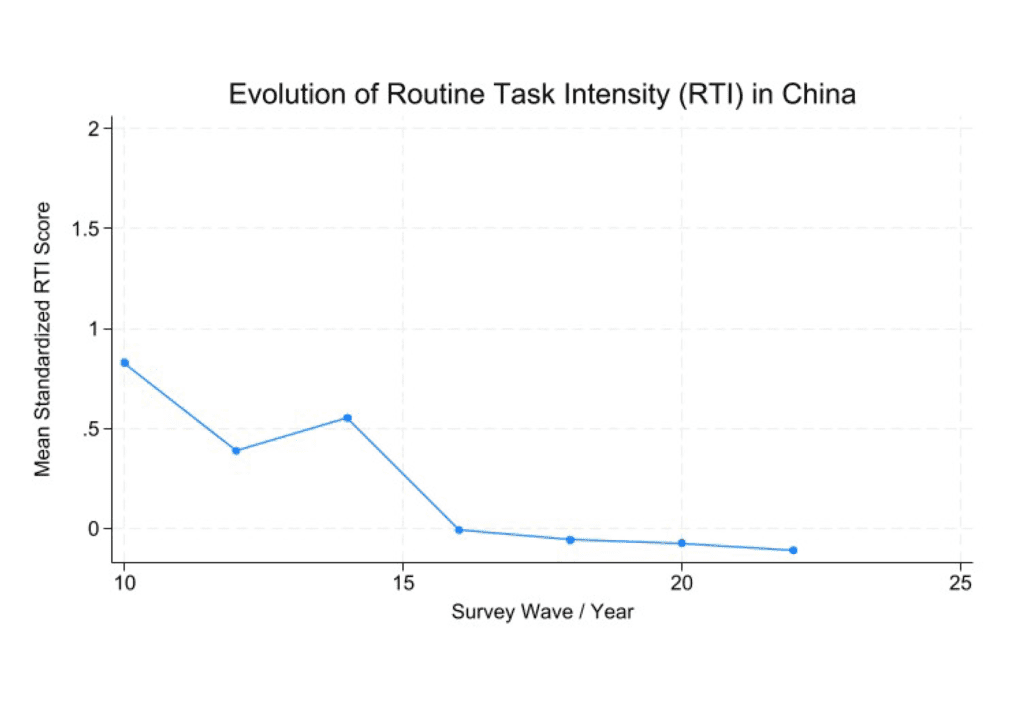
Figure 1: Routine task intensity in China has declined over time, reflecting broader structural transformation as technological upgrading shifts labor demand toward more complex tasks.
Automation risk depends on the nature of work
Not all jobs face the same risk from automation. Occupations that rely heavily on routine tasks, whether physical or cognitive, are easier for machines to replace. Jobs that require analytical thinking, problem-solving, or interpersonal skills are generally harder to automate.
For workers from the bottom quartile of the income distribution, mobility outcomes differ sharply depending on the type of job they enter. Workers in occupations vulnerable to automation face much weaker prospects of upward mobility, as reflected in both occupational status and income.
Routine work lowers occupational status
Workers in occupations more exposed to automation face clear long-term disadvantages. Higher exposure to automation lowers both occupational status and earnings.
A one-standard-deviation increase in automation exposure is associated with roughly a 10% reduction in income. The effect is visible across the income distribution, but it is especially pronounced at the top. A one-standard-deviation increase in automation risk reduces income by about 20% for workers in the top 10% of the income distribution, compared with about 12% for workers in the bottom 10%.
This means that automation is not only affecting workers at the bottom of the labor market. Research now clearly shows that Chinese middle- and upper-class workers in routine-heavy roles face high downward mobility risks as well. In these sectors, a privileged family background offers little protection against structural automation.
How automation compresses social mobility
One striking finding of our research is that automation is creating what we describe as downward equalization. Technological change is pushing workers from very different family backgrounds toward the middle and lower parts of the income distribution.
When we examine mobility patterns without considering automation risk, we see the familiar pattern of persistence across generations. Individuals born into both the highest and lowest income groups tend to remain there.
However, once automation exposure is taken into account, the picture changes dramatically. For individuals born into the top quartile of the income distribution, entering a routine-intensive occupation sharply reduces their chances of staying in that quartile. Only 1.4% remain in the top quartile, compared with around 89% of those who enter low-routine occupations. At the same time, workers from poorer backgrounds in these same occupations have very limited prospects of moving upward.
In other words, automation weakens the role of family background in shaping economic outcomes—but not in a way that expands opportunity.
Instead, workers from many different backgrounds are increasingly converging toward the middle of the distribution.
This pressure is felt most strongly in routine-intensive occupations, such as basic clerical work, where tasks are easiest to automate. By contrast, workers in occupations requiring analytical, technical, or interpersonal skills continue to enjoy much stronger mobility prospects.
Implications for workers and policy
The findings suggest that in today’s China the dividing line between success and stagnation is no longer determined only by family background. Increasingly, it depends on the nature of one’s work—particularly whether a job is complemented by technology or replaced by it.
As automation continues to reshape the labor market, traditional pathways to upward mobility may become harder to access for workers concentrated in routine-intensive occupations.
Policies that help workers transition into jobs that complement new technologies—through skills development, retraining, and labor market support—will be essential if technological upgrading is to expand opportunity rather than narrow it.
This article is part of a series co-published by GlobalDev and UNU-WIDER that covers research papers accepted to the 2026 WIDER Development Conference on green industrialization and inclusive growth in a fractured world order. It is also available on the UNU-WIDER blog.
(The views expressed in this piece are those of the author(s), and do not necessarily reflect the views of the Institute or the United Nations University, nor the programme/project donors.)