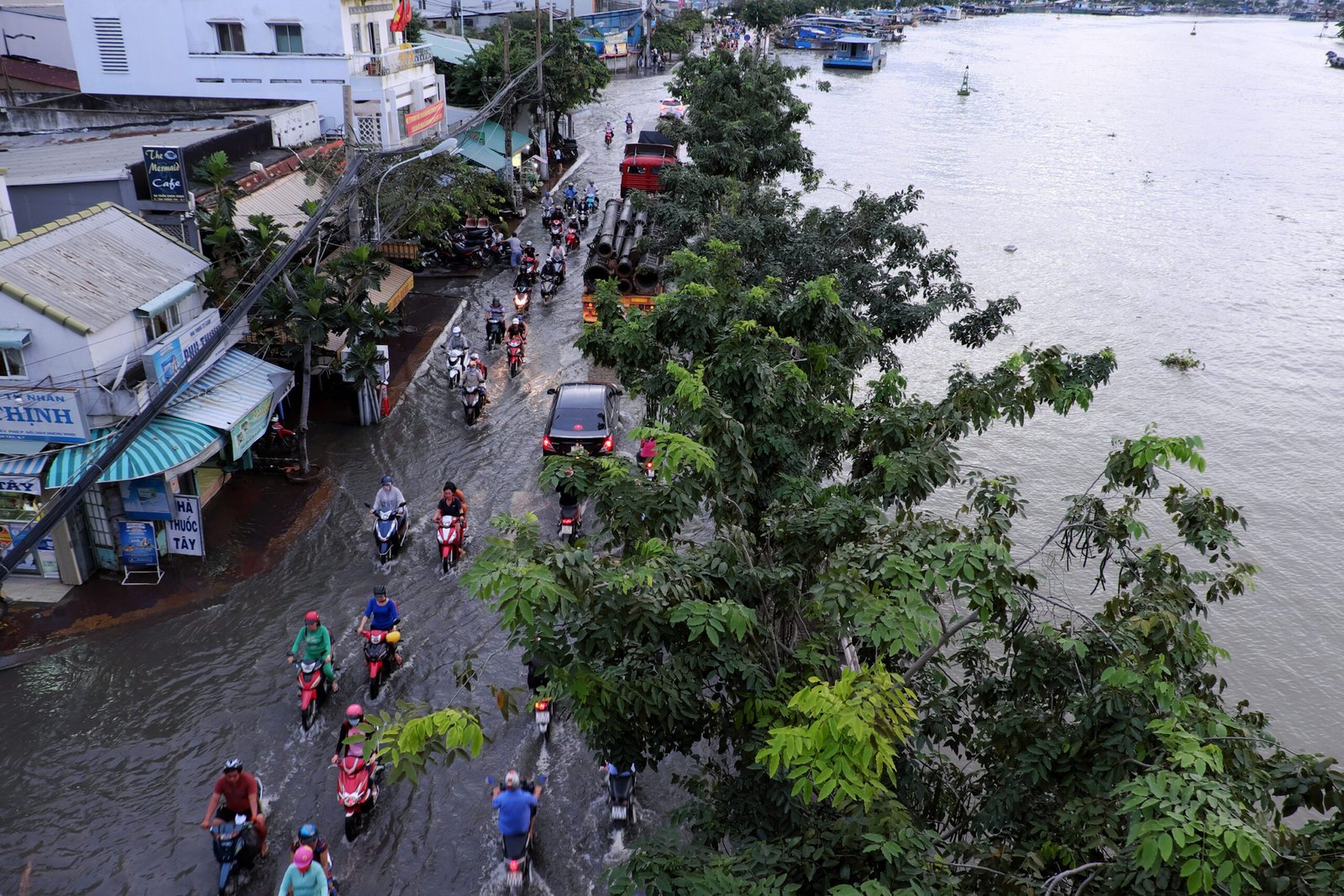
Climate change is reshaping where and how people live, forcing millions to move or trapping them in increasingly uninhabitable places. Addressing it requires resilient policies that go beyond the headlines and recognize the complex, intersectional forces shaping human mobility.
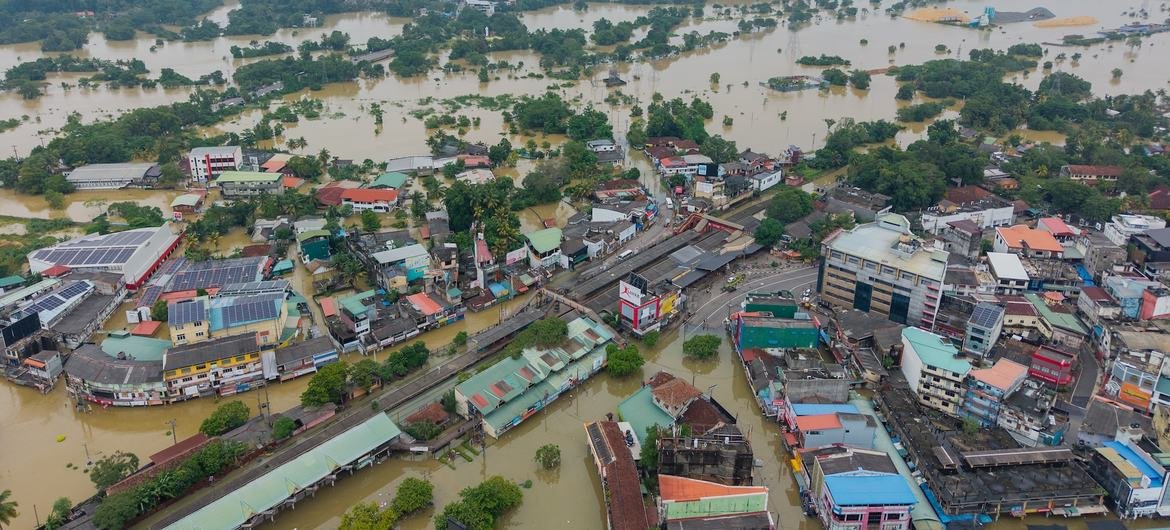
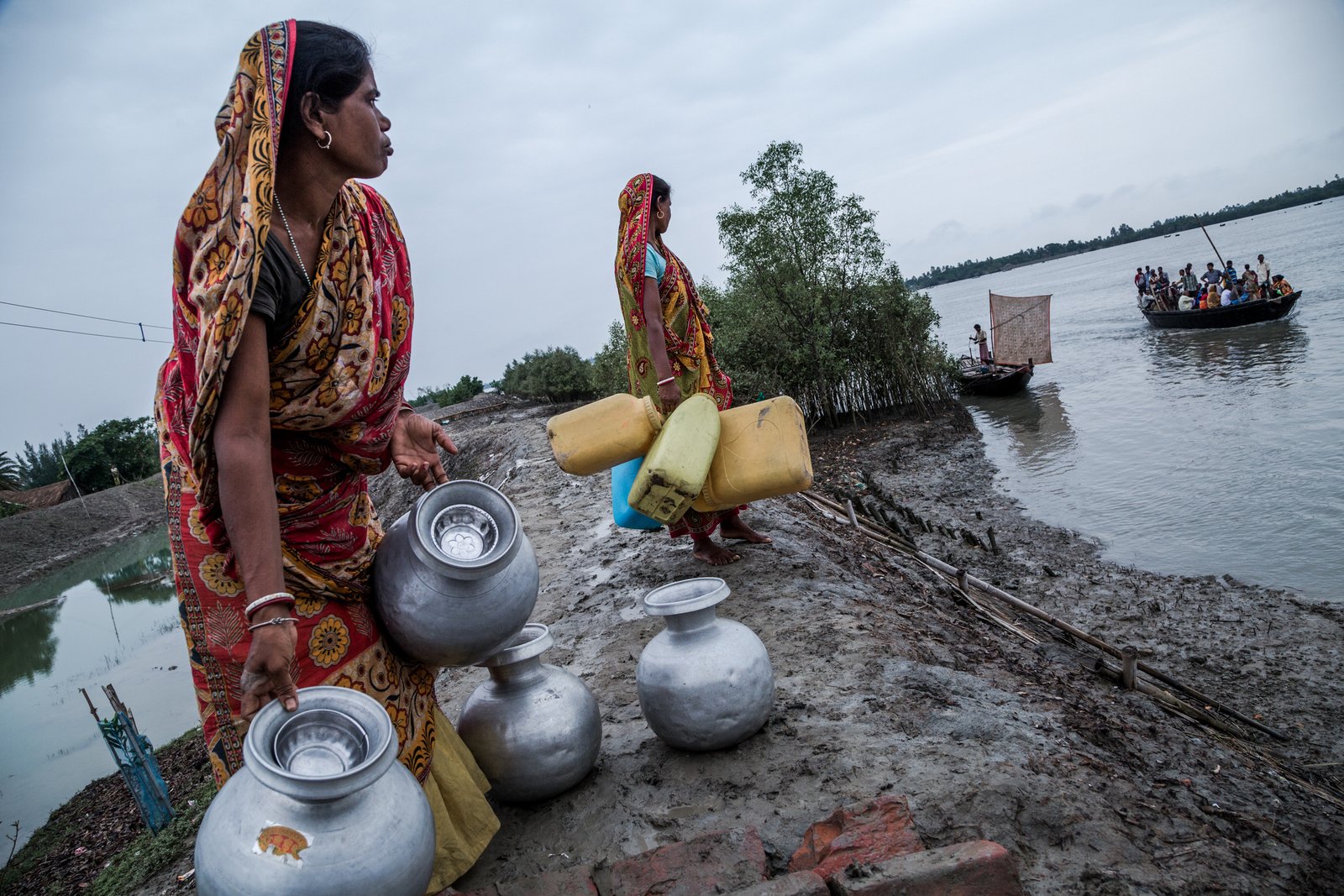
Floods, heatwaves, droughts, and storms now uproot millions every year, yet most of those displaced never cross a border. They remain internally displaced, even as climate-linked mobility rises sharply across the world. In South and Southeast Asia, rising seas and intensifying cyclones are pushing coastal communities into repeated cycles of loss and relocation. Across the Andes and into the Amazon, devastating wildfires and unprecedented flooding are destroying homes, livelihoods, and ecosystems on which millions of Indigenous people depend. In Ethiopia and surrounding regions, severe, prolonged droughts have affected an estimated 36 million people, eroding food security and forcing families to move in search of water and pasture. In Central America, farmers in Guatemala and Honduras are experiencing near-total harvest losses as climate extremes intensify, driving many to abandon their lands altogether.
At the recent COP30, experts warned that if current trends continue, some nations may soon become unlivable, submerged by rising seas or parched beyond survival. Human mobility linked to climate stress is already significant and is projected to grow. By 2050, climate impacts may displace an estimated 143 million people in the Global South alone: 86 million in Sub-Saharan Africa, 40 million in South Asia, and 17 million in Latin America. These figures are driven largely by slow-onset climate stresses, including water scarcity, crop failure, and sea-level rise, that degrade livelihoods and render land increasingly uninhabitable.
Yet climate mobility is neither uniform nor straightforward. It emerges as an interplay of environmental stressors, economic conditions, social inequalities, and political contexts. Research shows clear pathways linking climate-driven livelihood loss to shifts in migration patterns, labor decisions, and demographic change. At the same time, receiving regions face their own challenges as they absorb new arrivals, requiring investments in resilient infrastructure, inclusive public services, and forward-looking urban planning.
Climate change is reshaping where and how people live, as rising temperatures, extreme weather, shifting rainfall, salinization, and declining agricultural productivity drive both sudden displacement and gradual mobility shifts. In this context, remaining in hazard-exposed areas can reflect voluntary immobility when people choose not to move, or involuntary immobility when they would prefer to move but cannot—often referred to as “trapped populations.” Consequently, those most affected by climate impacts are often the least mobile, facing escalating risks and limited adaptation options even as humanitarian systems remain focused primarily on those who can move.
What is clear is that climate-related migration is not merely an environmental issue—it is fundamentally a human one. Addressing it demands emission reduction, stronger local resilience, and an understanding of migration as a potential form of adaptation when supported by rights-based, well-governed policies.
We invite blog contributions
In this context, we are pleased to announce a call for blog contributions from scholars, practitioners, community experts, and interdisciplinary researchers working on the dimensions of climate change and human migration.
We welcome blog pieces that explore themes including, but not limited to:
- Funding and resource flows: How do climate-finance patterns affect communities experiencing displacement or mobility pressures?
- Social and cultural impacts: How do migration dynamics reshape social cohesion, identity, and community structures?
- Economic and labor dimensions: What does climate-related mobility mean for labor markets, remittances, rural economies, or urban development?
- Intersectionality: How do gender, childhood, disability, caste, ethnicity, or minority status shape the risks and experiences of climate-affected migrants?
- Coastal and fisherfolk livelihoods: How is climate change transforming traditional coastal economies and mobility patterns?
- Policy and governance: What frameworks and interventions are necessary to support safe, dignified, and voluntary mobility as an adaptation strategy?
We do not accept research papers, academic articles, or policy briefs. We want authors to focus on a development policy challenge and tell us what they know about it from their research and the research of others. We accept pieces in English, Spanish, or French.
A special editorial panel will review submissions in response to this ‘Special Debate’ on GlobalDev. We highly recommend that the authors check our Style Guide before submitting the blog pieces through the Write for Us page.
About this Call
This call for contributions is launched in the context of the work that Global Development Network (GDN) is carrying out in close partnership with the Center for Systems Solutions, and Future Earth US global hub, in support of the Belmont Forum’s Collaborative Research Action (CRA) on Integrated Approaches to Human Migration/Mobility, a global research program funded by 12 research funders globally. The program supports five global research consortia investigating the evolving relationship between climate change and human migration/mobility. The work GDN, CRS and FE do together supports the strategic impact of the program. Through this new series, GlobalDev, the research communications platform of GDN, aims to curate diverse perspectives, amplify underrepresented voices, generate knowledge, and stir public and policy debate that can inform decisions, practices, mindsets, and future research and action around this urgent topic.