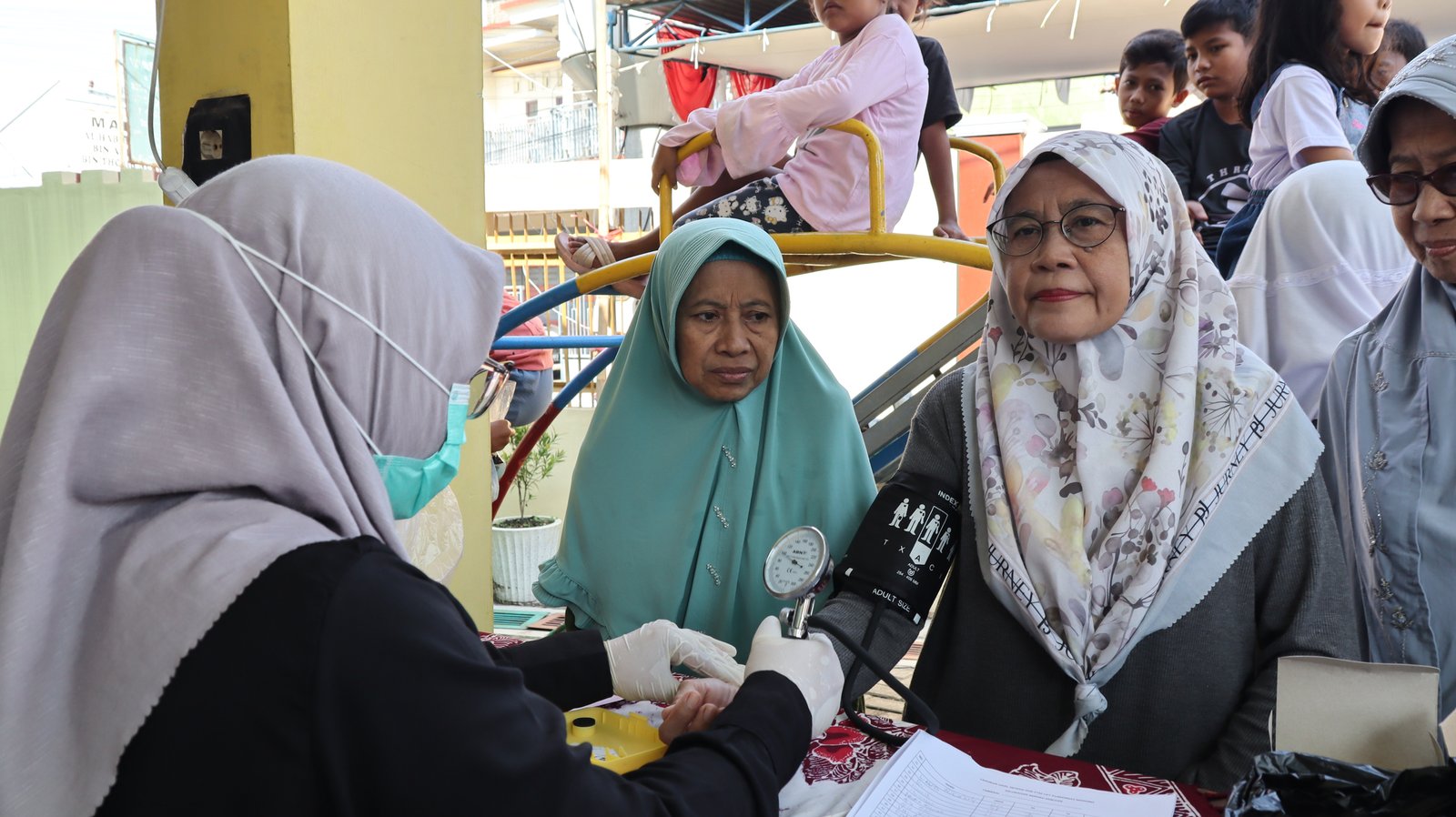
Health-related goals have been important global priorities under the Millennium Development Goals (MDGs) as well as the Sustainable Development Goals (SDGs), but progress has been mixed. To reinvigorate progress toward health-related SDGs, in 2018, the World Health Organization (WHO) set the ambitious “Triple Billion targets,” aiming for 1 billion more people benefiting from universal health coverage, 1 billion more people protected from health emergencies, and 1 billion more people enjoying better health and well-being by 2023, now revised to 2025.
By the end of 2025, the world is on track to achieve only one of the three Triple Billion targets. An estimated 4.5 billion people still lack adequate access to essential health services. This is reflected in some specific health outcomes, such as maternal and child malnutrition, which remains a leading cause of death, accounting for 35% of the disease burden among children under five.
These gaps in public health are most pronounced in the Global South, where severe capacity and resource constraints are faced. By 2030, low-and middle-income countries are expected to face a shortage of 10 million health workers. Improving health outcomes in these settings will require major innovations in public health, health systems, and service delivery. While knowledge sharing between countries plays a role, innovations must emerge both from and adapt to local contexts in the Global South.
The experience of the COVID-19 pandemic highlighted the importance and potential of health innovations that emerge in resource-limited contexts. Local innovations in health service delivery mechanisms, information systems, health workforce mobilization, vaccines and diagnostics, health technologies, financing mechanisms, and other related domains allowed many countries to maximize the effectiveness of limited resources in responding to the pandemic.
Linking health care institutions with financial, governance, and public service delivery mechanisms can significantly increase system capacity. It is also important for such integrated systems to leverage gains from digitalization. One prominent example is the use of conditional cash transfers, enabled by digital payment systems, to incentivize community health workers and mothers to improve nutrition uptake and vaccine timeliness.
Digital health technologies, including artificial intelligence (AI), offer unprecedented opportunities to leapfrog traditional bottlenecks in public health and health service delivery. This has become increasingly feasible due to the digitization of health data. Innovations in digital health and AI now enable access to patients’ medical histories and improved population-level health statistics, supporting early diagnosis, preventive care, and population-scale interventions ahead of disease outbreaks. Access to such data can also expand insurance coverage through interconnected digital infrastructures, such as India’s National Health Stack and Brazil’s e-SUS.
The emerging frontier of digitized health data, combined with declining computational costs, is enabling innovation through AI models that learn from historical data. These advances offer possibilities such as remote diagnostics, personalized treatment recommendations, and optimized use of scarce medical resources. As a result, these innovations are attracting increased investment from both public and private funders worldwide.
However, significant concerns remain regarding safety, privacy, and exclusion in digital health innovations. There is also a critical role for local research, alongside validated scientific evidence, to assess impacts, establish safeguards, ensure inclusion, and improve implementation. Countries in the Global South are pursuing different pathways to develop and implement digital health systems, resulting in uneven progress and raising the risk of a new digital divide—both within and across regions.
Beyond technological and financial infrastructure, social innovation in health offers a transformative approach that highlights creative solutions emerging from and with communities, especially in vulnerable contexts. By articulating community participation, intersectoral dialogue, and contextualized evidence, social innovation improves the coverage and quality of services, while expanding opportunities for health equity.
In this context, GlobalDev at the Global Development Network (GDN), the Social Innovation Hub for Health in LAC (SIHILAC) and the Health AI for All Network (HAINet) invite researchers to draw on their work and available evidence to submit blog posts on public health innovations that strengthen health systems, improve access and universal health coverage, and transform health service delivery in resource-limited settings. Submissions should be approximately 800 words and may address any of the following indicative themes:
- How public health innovations can improve universal health coverage in the Global South.
- The role and impact of public health AI in strengthening health systems.
- Challenges, risks, and concerns associated with public health innovations
- Case studies demonstrating the successful integration and implementation of digital health systems.
- The role of standards and governance in shaping public health innovations.
- Mobilizing domestic and international resources to finance public health innovations in resource-limited settings.
- Building local capacity for public health innovation.
- Realistic, actionable policy recommendations for governments and international organizations.
All drafts focusing on public health innovations will be considered. We encourage submissions from a wide range of authors, with a focus on contributions that align with GlobalDev’s editorial approach of using existing research to illuminate policy questions. A special editorial panel will review submissions for this GlobalDev Special Debate. Authors are strongly encouraged to review the Style Guide before submitting the blog pieces through the Write for Us page.