The green transition requires coordinated action from governments around the world, and finance ministries are no exception. To ensure that decarbonization strategies are implemented successfully, ministries must work together to design effective policies. Scenario exercises could aid this process, while also boosting coordination between finance ministries and other key stakeholders such as central banks and financial authorities.
COP30 established an implementation agenda that places finance ministries at the forefront of climate action. However, to support and help coordinate this agenda, ministries—working jointly with public development banks and financial authorities—should develop a new set of economic policy scenarios for climate and nature. Such an exercise could help them navigate today’s strong economic headwinds, while fully leveraging the ‘Baku-to-Belém Roadmap’ outcomes and broader sustainability objectives in sight.
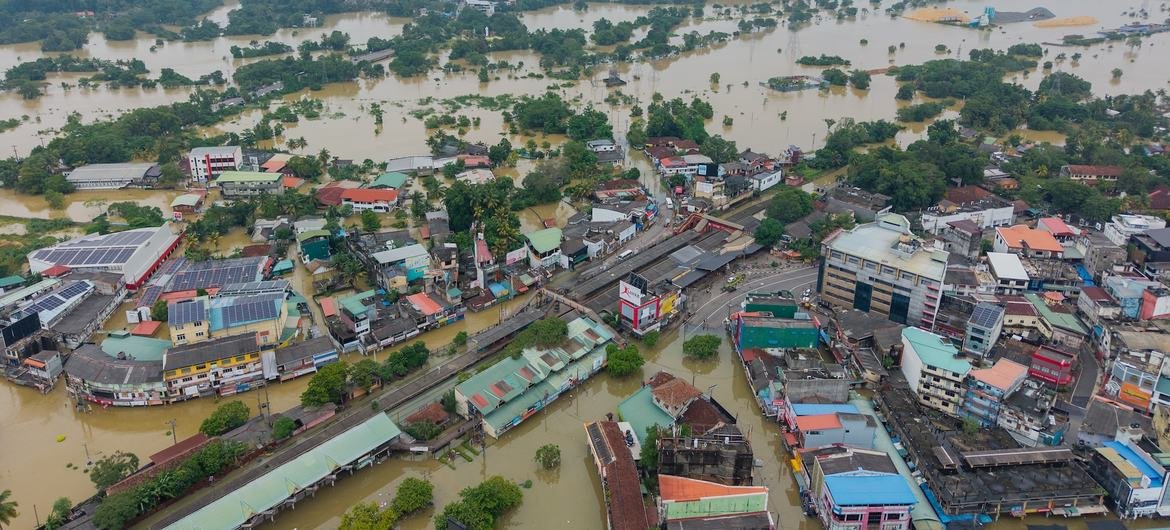
The global economy has entered a period of heightened turbulence. In terms of energy, the legacy fossil-based systems still dominate, even as new low-carbon alternatives rapidly scale up and displace established practices. At the same time, intensifying climate shocks, biodiversity loss, and geopolitical fragmentation are combining to generate strong headwinds, with the potential to create mounting fiscal pressures for governments around the world.
For finance ministries, this means that climate change can no longer be treated as a mere externality. It has become ‘macro-critical’, interacting directly with fiscal balances, economic competitiveness, debt sustainability, energy security, investment opportunities, and development planning.
| Year | COP Name | City | Main Agenda / Focus |
|---|---|---|---|
| 1995 | COP1 | Berlin, Germany | Berlin Mandate — Launching stronger climate commitments |
| 1996 | COP2 | Geneva, Switzerland | Geneva Declaration — Recognizing need for binding targets |
| 1997 | COP3 | Kyoto, Japan | Kyoto Protocol — Legally binding emissions targets |
| 1998 | COP4 | Buenos Aires, Argentina | Implementation plan for Kyoto mechanisms |
| 1999 | COP5 | Bonn, Germany | Technical rules for Kyoto Protocol |
| 2000 | COP6 | The Hague, Netherlands | Disagreements over carbon sinks & finance |
| 2001 | COP7 | Marrakesh, Morocco | Marrakesh Accords — Kyoto implementation rules finalized |
| 2002 | COP8 | New Delhi, India | Delhi Declaration — Equity & development focus |
| 2003 | COP9 | Milan, Italy | Operational details for Kyoto carbon markets |
| 2004 | COP10 | Buenos Aires, Argentina | Adaptation and climate resilience discussions |
| 2005 | COP11 | Montreal, Canada | Kyoto Protocol enters into force; future pathways discussed |
| 2006 | COP12 | Nairobi, Kenya | Nairobi Work Programme on Adaptation |
| 2007 | COP13 | Bali, Indonesia | Bali Action Plan — Start of post-2012 negotiations |
| 2008 | COP14 | Poznań, Poland | Progress toward Copenhagen agreement |
| 2009 | COP15 | Copenhagen, Denmark | Copenhagen Accord — Temperature target of 2°C |
| 2010 | COP16 | Cancún, Mexico | Cancún Agreements — Green Climate Fund launched |
| 2011 | COP17 | Durban, South Africa | Durban Platform — Roadmap for a global agreement |
| 2012 | COP18 | Doha, Qatar | Doha Amendment to Kyoto Protocol |
| 2013 | COP19 | Warsaw, Poland | Warsaw Mechanism on Loss and Damage |
| 2014 | COP20 | Lima, Peru | Lima Call for Climate Action |
| 2015 | COP21 | Paris, France | Paris Agreement — Global climate framework |
| 2016 | COP22 | Marrakesh, Morocco | Marrakesh Partnership & Paris rulebook work |
| 2017 | COP23 | Bonn, Germany (Fiji presidency) | Talanoa Dialogue introduced |
| 2018 | COP24 | Katowice, Poland | Katowice Rulebook — Paris implementation rules |
| 2019 | COP25 | Madrid, Spain (Chile presidency) | Article 6 negotiations (carbon markets) |
| 2021 | COP26 | Glasgow, UK | Glasgow Climate Pact — Phase-down of coal |
| 2022 | COP27 | Sharm El-Sheikh, Egypt | Loss and Damage Fund agreed |
| 2023 | COP28 | Dubai, UAE | Global Stocktake; call to transition away from fossil fuels |
| 2024 | COP29 | Baku, Azerbaijan | Climate finance goals for 2025–2030 |
| 2025 | COP30 | Belém, Brazil | Focus on Amazon protection, indigenous rights, forest finance |
How can fiscal policy be mobilized to navigate this turbulence? How can governments around the world coordinate cost-effective low-carbon and climate-adaptation investment plans that reflect global dynamics and plausible extremes? How can finance ministries, through their many functions, integrate climate and nature considerations? How can they coordinate effectively with public financial authorities on long-term planning, or with central banks on issues such as inflation or carbon pricing? And how can national policies and ambitions be aligned with those of regional and global coalitions for climate action?
These are just a few of the tricky questions that joint climate and nature economic policy scenario exercises could help answer. Of course, countries differ widely in available fiscal space, market access, exposure to climate and nature risks, structural characteristics, and institutional settings. Yet, a joint discussion on plausible extremes, possible global futures, and policy mixes remains key to collectively identifying a set of core principles and prospective narratives, acknowledging national-level factors and the diverse policy mixes suited to each context.
Such scenario exercises, if actively co-developed by the relevant parties, including finance ministries, public development banks, and financial authorities, could gradually transform both the domestic and global financial architecture. On the one hand, domestic investors would interpret these scenarios as credible signals that public authorities are now ready and willing to engage more actively in shaping the green transition. On the other hand, for public development banks and financial authorities, such scenarios would shed light on their respective mandates for public investment and financial regulation.
Scenarios produced by finance ministries would also enhance dialogue with central banks. Since 2017, through the Network for Greening the Financial System (NGFS), central banks have already developed a series of scenario exercises that respond to their mandate of price stability and financial stability. Scenarios for finance ministries will need to take a very different form from these, focusing on shorter-run plausible extremes and possible opportunities in the transition, while mobilizing a wider range of policy levers such as fiscal and debt policy, support for green innovation, and social transfers.
On a global level, vertical funds, multilateral institutions, and foreign private investors would get a clearer understanding of each country’s planned transformation and the trade-offs involved. This could encourage broader participation in existing and emerging country platforms throughout the developing world. At the same time, the transformative power of finance ministries could be reinforced through stronger coordination on future scenarios—helping to accelerate reforms of the international financial architecture by incorporating climate and nature into policymaking.
Finance ministries have already learned to coordinate on climate-related issues through the G20 and G7 dedicated technical tracks, as well as through platforms such as the Coalition of Finance Ministers for Climate Action (CFMCA), the COP30 Circle of Finance Ministers, and various regional networks. Similar cooperation initiatives have also emerged among public development banks, such as the Finance in Common Network (FiCS) or the International Development Finance Club (IDFC). These platforms would be ideal partners for building such a shared vision of possible futures and of the domestic policy responses those futures would require. Climate and nature economic policy scenarios for finance ministries could fill that important implementation gap in the post-COP30 agenda.