Uganda’s rising temperatures and increasingly unpredictable weather are placing growing pressure on rural livelihoods and food systems. While women-led climate initiatives have expanded across the country, many still fail to address the deeper economic and institutional barriers driving climate vulnerability in rural communities. Building long-term climate resilience in Uganda will require more locally grounded approaches that strengthen women’s economic security, decision-making power, and adaptive capacity.
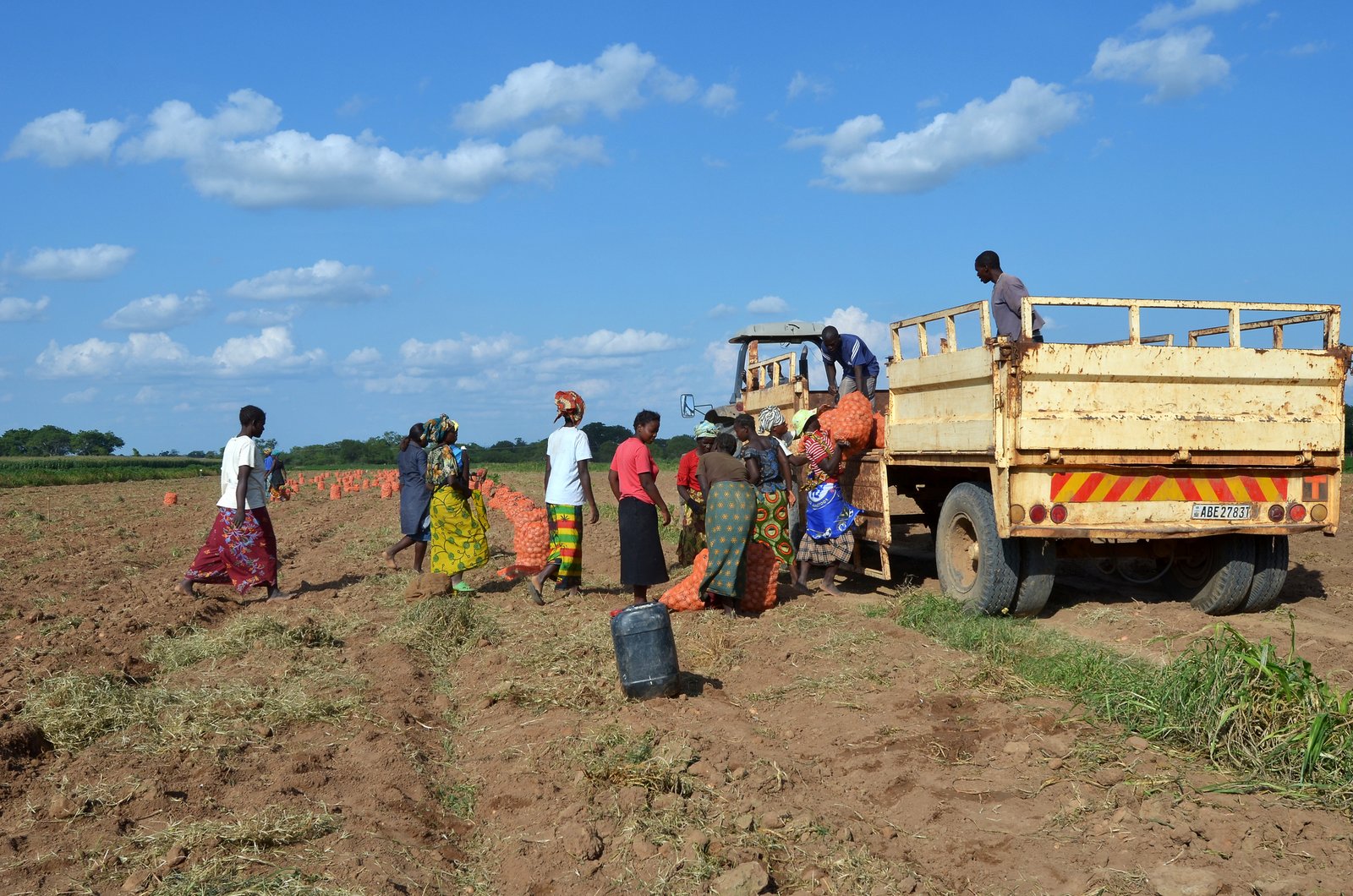
Climate change is an increasing problem in Uganda. Rising temperatures, prolonged droughts, landslides, floods, and erratic rainfall are continue to disrupt livelihoods across the country, where more than 60% of the population depends on agriculture.
Uganda’s average surface temperatures have increased by 1.3°C since the 1960s, while greenhouse gas emissions nearly tripled between 1995 and 2019, according to the World Bank.
Source: World Bank’s Climate Risk Profile for Uganda.
Women remain among the most vulnerable to climate shocks. This is because much of their livelihoods depend directly on weather conditions. On top of this, their dependence on agriculture increases exposure to poverty and existing socio-economic inequalities.
Consequently, women have become increasingly active in Uganda’s climate response through climate awareness campaigns, agroforestry activities, community savings groups, and digital advocacy initiatives (in both rural and urban areas). Young activists such as Vanessa Nakate have placed Uganda within global climate justice debates.
Even so, this growing public recognition has not always translated into meaningful power or long-term resilience for the rural communities most affected by climate change. Rethinking these approaches requires moving beyond short-term participation toward longer-term investments that strengthen women’s economic security, local leadership, and adaptive capacity.
The urban-rural divide in climate activism
A major challenge is the growing disconnect between national climate advocacy and the realities of rural communities. Today, many of the most prominent voices in Uganda’s climate movement are young, urban-educated activists with access to digital networks and donor funding. While their contributions remain important in raising international awareness, these advocacy spaces do not always reflect the experiences of the rural women most directly affected by climate change.
Rural women remain underrepresented in climate governance processes. Their voices are often absent from district climate planning, adaptation planning, and national climate policy consultations where decisions about resilience priorities are made. In regions such as Karamoja and Teso, women continue to face multiple pressures, including insecure land tenure, discriminatory inheritance practices, limited agricultural extension services, crop failure, food insecurity, land degradation, and water scarcity
Although women are already involved in adaptation initiatives such as tree-planting campaigns and awareness workshops, inclusion alone does not address the economic and institutional barriers shaping vulnerability. For rural women, climate resilience is constrained less by awareness than by limited access to land, credit, agricultural inputs, and decision-making power.
Similarly, environmental campaigns may raise public awareness without improving access to markets, irrigation systems, or agricultural extension services that are essential for long-term adaptation. Savings groups may improve short-term coping capacity without addressing barriers such as land access, credit, and decision-making power. Recent research on gender-responsive climate adaptation in Uganda highlights how women continue to face limited access to agricultural extension services, credit, insurance, and climate adaptation financing. Only 31% of women in Uganda own land, restricting their ability to access formal finance and invest in long-term resilience. Without addressing these barriers, climate interventions risk becoming symbolic rather than transformative.
The limits of donor-driven climate action
Another significant challenge is Uganda’s heavy dependence on external climate financing. Most women-led climate organisations in Uganda rely on international grants and donor-funded projects that operate through short-term funding cycles.
While external support has played an important role in expanding climate action, it has also created long-term sustainability problems. Many projects prioritise short-term outputs over building durable local institutions and long-term resilience. Once funding ends, many community initiatives struggle to continue because local organisations lack the financial capacity to sustain them.
Climate agendas are often shaped by donor expectations rather than locally identified needs, leaving communities to implement externally designed programmes. Reporting by Mongabay highlights how only a small share of international environmental funding reaches women-led climate initiatives in developing countries. This raises questions about the sustainability of climate movements dependent on international funding.
Toward a more grounded climate policy
Uganda’s climate response requires a broader rethinking of how climate resilience is understood, financed, and implemented.
First, climate policy must move beyond narrow gender representation and address the wider structural conditions that intensify vulnerability. Climate resilience is closely linked to broader economic and governance inequalities. Investments in irrigation systems, rural roads, agricultural extension services, and local food systems are just as important as awareness campaigns and advocacy initiatives.
Beyond infrastructure and financing, rural communities must also play a more meaningful role in shaping climate responses. Women farmers and grassroots organisations should take an active role in designing adaptation strategies. For example, women-led savings groups and farmer associations in eastern Uganda have helped households diversify livelihoods, adopt drought-tolerant crops, and share climate information at the community level. Similarly, community-based agroforestry and watershed restoration initiatives have drawn on local ecological knowledge to address soil degradation and water scarcity. These locally grounded approaches are often more responsive to local needs because they build on existing community networks, priorities, and knowledge systems.
Beyond infrastructure and financing, rural communities must also play a more meaningful role in shaping climate responses. Women farmers and grassroots organisations should take an active role in designing adaptation strategies. For example, women-led savings groups and farmer associations should support households to diversify livelihoods, adopt drought-tolerant crops, and share climate information at the community level.
Similarly, community-based agroforestry should adopt local ecological knowledge to address soil degradation and water scarcity. In fact, research shows that locally grounded, as well as adaptation strategies that build on community engagement and indigenous ecological knowledge, are often more responsive to local needs.
Finally, Uganda needs more sustainable financing models that strengthen local ownership rather than reinforce donor dependence. Supporting women’s agricultural cooperatives, expanding district-level climate financing, and investing in community-led adaptation projects could help communities build resilience beyond short funding cycles.
Decentralised financing mechanisms could allow local governments and communities to identify adaptation priorities based on local environmental conditions and livelihood needs. This could support longer-term investments in irrigation, rural infrastructure, and food production.
Visibility alone is not enough. Although women-led climate movements have helped bring greater public attention to climate injustice in Uganda, climate action must move beyond symbolic representation and confront the deeper economic and institutional barriers shaping vulnerability. Only then can women-led climate action become truly transformative.