The 2023 Australia–Tuvalu Falepili Union treaty brought to the fore the profound effects of climate change on migration patterns in the Pacific. The agreement provides a pathway for citizens of Tuvalu to emigrate and live and work in Australia on a permanent basis, citing the impacts of climate change on communities. However, while the international community has focused on sea level rise as a primary driver of climate migration, other factors, such as ocean acidification, coral bleaching, and marine heatwaves, have also increased the vulnerability of coastal communities.
Kiribati and Tuvalu consist mostly of atolls—low-lying islands formed by coral. While their combined landmass totals 837 km2, their Exclusive Economic Zones (EEZs) cover nearly 4.5 million km2 —larger than the landmass of India.
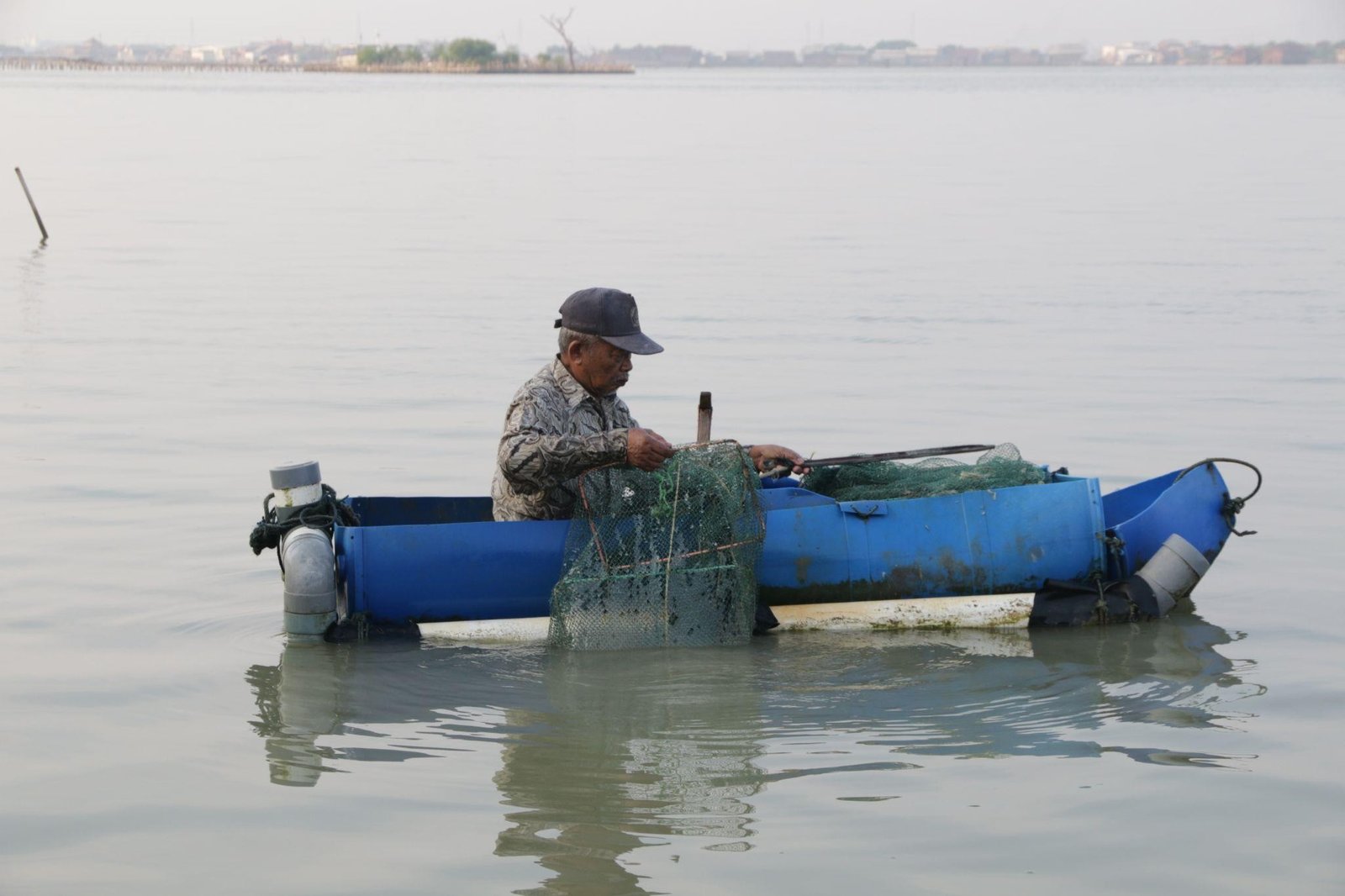
Due to their unique geography, fishing is a primary source of food and household income. On average, people in Kiribati and Tuvalu consume 72 kg and 56 kg of fish per year, respectively—among the highest consumption rates in the world. In Tuvalu, selling fish is the main source of income from primary activities of 25% of households (37% in rural areas). In Kiribati, 47% of households rely on fisheries as their primary activity (67% in rural areas).
For fishing-dependent communities, the mounting impacts of both slow- and rapid-onset climate events have far-reaching consequences and contribute to the underlying drivers of internal and external migration.
Households participating in primary activities, by urban rural area and activities
The accelerating impacts of climate change
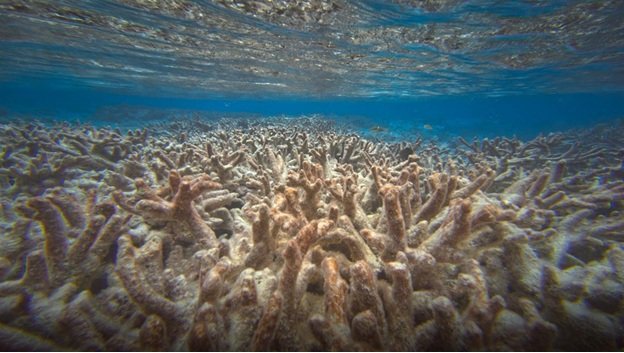
Globally, an estimated 84% of the world’s coral reef area was affected by heat stress between January 2023 and September 2025. Mass coral bleaching events have been reported in Kiribati at locations such as Kiritimati (Christmas Island), where nearly 90% of coral cover was lost during a warming event, intensified by the elevated 2015–2016 El Niño cycle.
With the loss of coral, coastal fisheries experience declines in fish abundance, species diversity and catch size. This results in communities resorting to traveling further for more plentiful fishing grounds—creating greater risk and increasing the cost of accessing their primary income-generating resource.
As climate change continues to affect the region, coral bleaching events are expected to occur annually. Models project a 40% reduction in catch potential in the tropics by 2055 as a result.
The impact of these potential losses on fishing communities would be transformative. Survey data from Tuvalu indicate that declining fish stocks are a significant factor driving migration. An estimated 61% of households reported that “fewer fish in the sea” would lead them to relocate.
Self-reported factors contributing to migration decision-making in Tuvalu
While slow-onset processes such as ocean acidification continue to affect fishing practices, rapid-onset events, such as cyclones, marine heat waves, and coral bleaching, have more immediate and severe effects on coastal communities. These events increase vulnerability and intensify the conditions that influence migration patterns.
Pathways forward
Given the limited research on loss and damage in tropical fisheries, further analysis is needed to better understand fishers’ needs, priorities, and local values, and to inform future adaptation planning.
Coastal fisheries also present challenges for quantitative analysis. Unlike offshore fisheries, they are difficult to evaluate due to their small scale, informal nature, and inconsistent data availability. However, these fisheries are critical for food security and household income and play a central role in local economies. It is therefore vital to understand them in the context of current and projected displacement risks.
To support evidence-based decision-making, the monitoring and assessment of coastal fisheries, similar to the attention given to oceanic fisheries, should be prioritized in future research on loss and damage. Slow- and rapid-onset events affecting coastal fisheries should also be acknowledged as potential drivers of internal migration, particularly rural-to-urban and outer-island-to-capital population flows. Potential tipping points, using metrics such as catch per unit effort (CPUE), despite certain methodological challenges, could be incorporated to assess and evaluate the vulnerability of fishing-dependent communities.
Tools and methodologies such as the “Cost of the Diet” approach could be used to analyze how changes over time affect food security, nutrition, and household food expenditure. Employment transitions among fishing-dependent communities affected by habitat and biodiversity loss should be incorporated into national climate resilience strategies and medium- to long-term planning. In addition, more inclusive and participatory research approaches should be adopted to ensure that culture and traditional knowledge are embedded in understandings of loss and damage as experienced by fishing communities.