Internal displacement due to climate change is a key challenge facing the Sahel region in Africa. However, while many frameworks recognize the migration risks posed by environmental factors, omissions are common when it comes to the effective integration of mobility into climate adaptation or economic development frameworks. Moving from recognition to action is an essential next step for policy makers in the Sahel region and further afield.
More than four million people were displaced from their homes across the Sahel in 2023 alone. Displacement across the region was driven by a mix of conflict, natural disasters, and environmental stress, according to the Internal Displacement Monitoring Centre’s Global Report 2025.
Despite growing recognition that climate change forces people to move, the risks posed by environmental factors remain poorly integrated into public policy. The challenge is not so much a lack of frameworks, but a failure to translate them into coordinated and operational governance.
Climate mobility is already shaping livelihoods
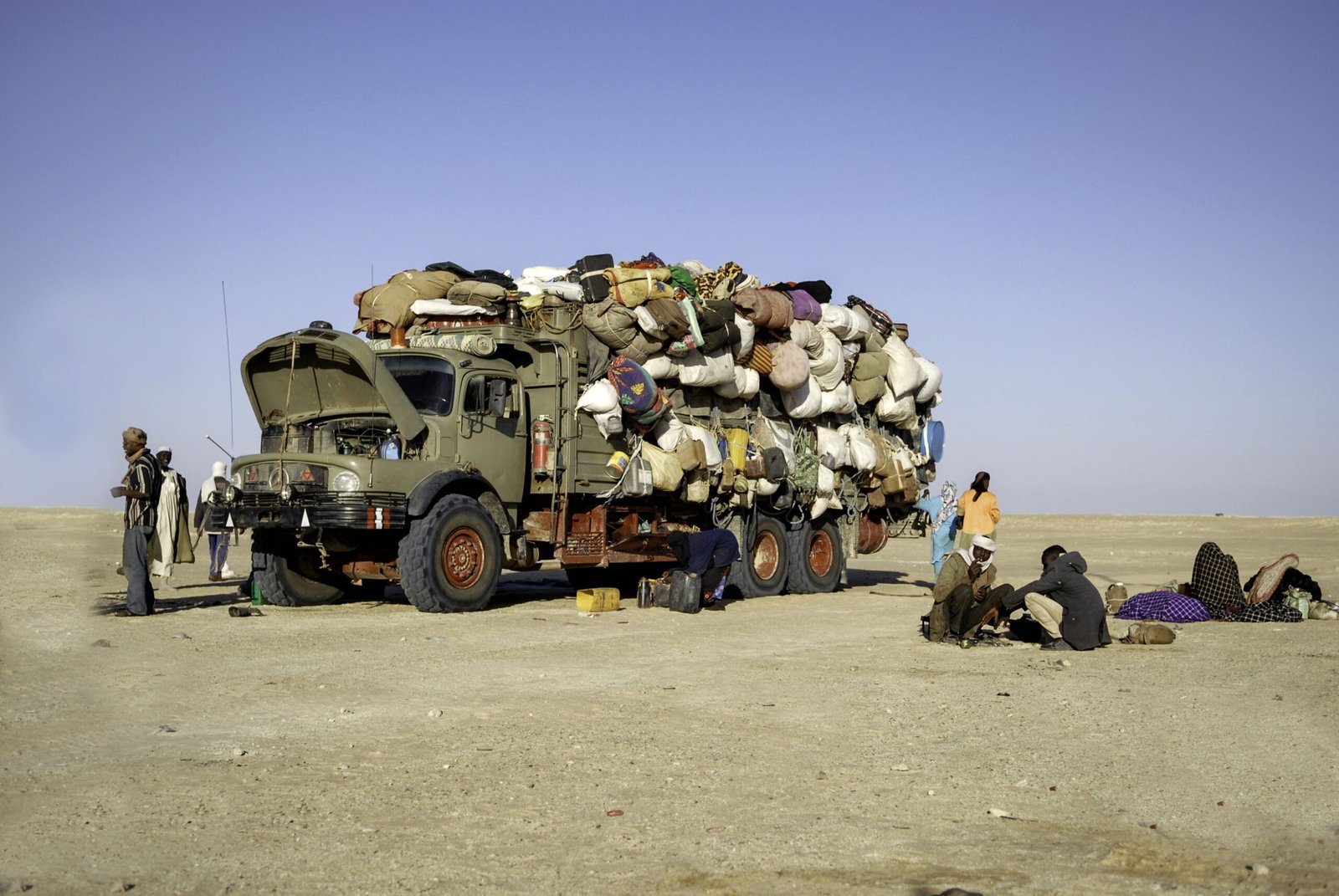
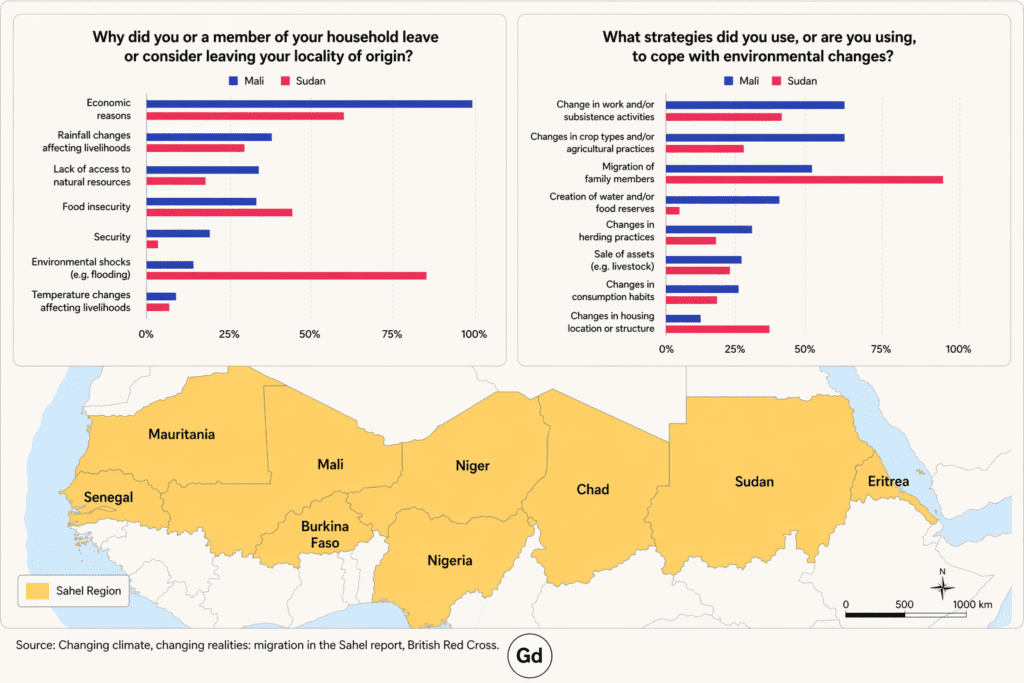
The Sahel region, which stretches across North Africa, from the Red Sea to the Atlantic Ocean, is on the frontline of climate change. Rising temperatures, erratic rainfall, and recurrent droughts are reshaping how people live and work.
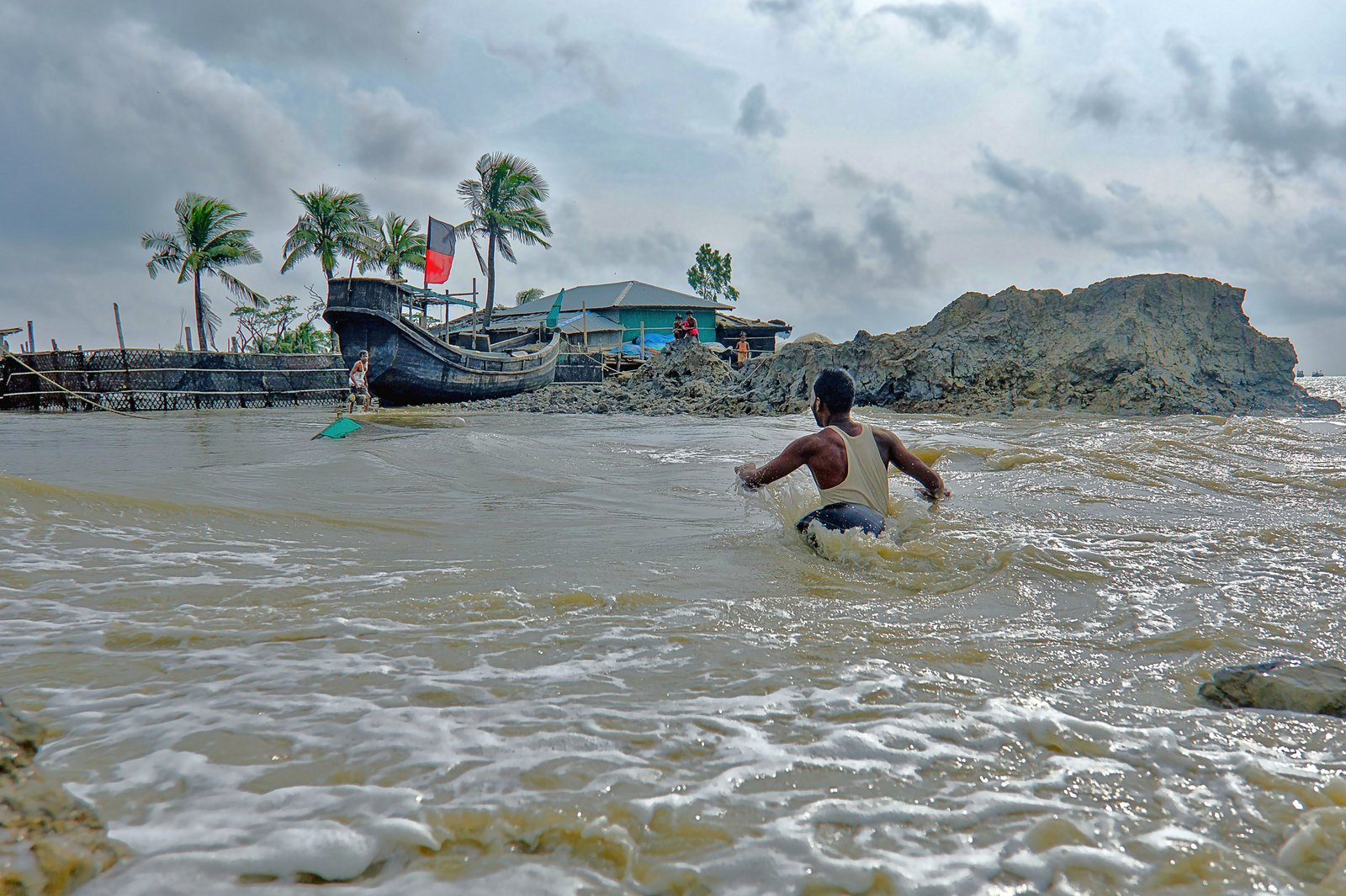
According to the World Bank’s Groundswell report, climate change could push up to 216 million people to move within their countries by 2050. Across the Sahel, this is already happening: droughts drive seasonal migration, while floods trigger sudden displacement. Data from the International Organization for Migration’s Displacement Tracking Matrix confirm that large scale movements are already taking place across West and Central Africa. These movements rarely have a single cause. As highlighted by the IPCC, climate change acts as a ‘threat multiplier’, interacting with conflict, poverty, and weak governance.
A growing policy framework, but a missing link
Over the past two decades, important legal and policy frameworks have emerged. The African Union’s Kampala Convention provides a binding framework for protecting internally displaced persons, including those affected by natural disasters. The Paris Agreement encourages countries to strengthen adaptation strategies. At the regional level, ECOWAS has also developed a climate strategy.
At the national level, progress is visible. Niger adopted a law on internally displaced persons in 2018, Mali developed a national strategy on displacement, Burkina Faso strengthened disaster response mechanisms, and Chad integrated climate priorities into development planning. However, across these frameworks climate mobility is rarely treated as a standalone policy issue. Environmental policies focus on resource management and climate risks, while migration policies focus on conflict and labour mobility. As a result, climate mobility falls between sectors.
What happens in practice?
A closer look at country level experiences reveals the gap between commitments and implementation. In Niger, the 2018 law on internally displaced persons – supported by UNHCR – is often seen as a model. But in practice, it mainly addresses conflict related displacement. Climate related mobility remains largely implicit.
In Burkina Faso, government frameworks acknowledge that drought has contributed to internal migration. Yet responses remain centred on land, water, and pastoral systems, without addressing broader mobility patterns such as rural to urban migration or planned relocation.
In Chad, adaptation policies recognize pastoral mobility as a resilience strategy. However, interventions still operate within sectoral boundaries, focusing on livestock and water access rather than human mobility as a broader governance issue. Across the region, the same pattern emerges: climate mobility is recognized, but not actively governed.
Why this matters
This gap has real consequences. People displaced by disasters and environmental stress face heightened risks. These impacts are also not evenly distributed. Recent work on gender and displacement in the Sahel, The Hidden Crisis: Women’s struggle for survival in the Sahel’s displacement emergency, shows that displaced women often face increased exposure to gender based violence, reduced access to livelihoods, and heavier care responsibilities. These vulnerabilities are rooted in pre existing inequalities, which displacement tends to amplify.
Evidence from a refugee camp in Maradi (Niger) suggests that mobility is a response, rather than a choice. For the many women fleeing violence and environmental stress, moving home is a necessity shaped by both insecurity and the gradual loss of livelihoods. This highlights a critical gap: policies often overlook how climate mobility is lived differently across gender and social groups. As discussed in these reflections on research in crisis settings, understanding displacement means paying close attention to lived realities. Ignoring these dimensions risks deepening inequalities and limiting the effectiveness of policy responses.
The real challenge: fragmented governance
The core issue is not the absence of frameworks – it is fragmentation. Climate, migration, disaster response, and development policies are handled by different institutions, often with limited coordination. Data systems are not aligned, and budgets rarely integrate mobility considerations.
Even where regional initiatives exist, such as those supported by the Sahel Alliance, implementation remains uneven. This means that responses are often reactive, focusing on dealing with immediate emergencies rather than long term planning. Yet evidence shows that mobility can support adaptation when it is safe and well managed. Migration can diversify income, reduce pressure on degraded land, and even strengthen resilience.
What needs to change?
First, climate mobility needs to be explicitly integrated into national policies, including adaptation plans and development strategies, as already encouraged in National Adaptation Plans under the Paris Agreement.
Second, existing legal frameworks must be translated into practice, with clear institutional mandates, coordination mechanisms and funding, building on existing ECOWAS frameworks.
Third, regional cooperation must move beyond commitments toward practical coordination – particularly through shared data systems and cross border approaches such as the IOM Displacement Tracking Matrix.
Finally, policies must adopt a human rights perspective, ensuring protection while supporting safe and dignified mobility in line with UNHCR protection frameworks.
Climate mobility in the Sahel is no longer a question of awareness. The evidence is there. The frameworks exist. What is missing is implementation. If mobility continues to be treated as a crisis, risks could deepen.
In contrast, if mobility is anticipated and carefully governed, it can become part of the region’s adaptation strategy. The challenge is clear: move from recognition to action.
This blog piece is part of a special series launched in the context of the work that Global Development Network (GDN) is carrying out in close partnership with the Center for Systems Solutions, and Future Earth US global hub, in support of the Belmont Forum’s Collaborative Research Action (CRA) on Integrated Approaches to Human Migration/Mobility.