As climate migration rates rise in Zambia, so will tensions in an otherwise peaceful country. Zambian policy and planning currently lack effective integration of migration trends into climate change resilience plans, putting vulnerable populations at risk. By using migration data, climate change policy can be targeted to support internal migrants as well as people who are unable to move and reduce tensions.
With over 70 distinct languages and associated tribes, most Zambians are subsistence farmers and rely on rainfed maize and livestock production. This makes the country especially vulnerable to climate change.
Climate shocks like severe drought and flooding can be disastrous for rural communities that already struggle with nutrition security, access to markets, health care, education, and diminishing natural resources. When people’s livelihoods depend on agricultural production, reduced rainfall or flash floods can decimate crops and put entire communities at risk. As climate-driven migration continues to grow without adequate national policies to support it, these communities become more vulnerable to its impacts.
Drought in recent years showcases Zambia’s vulnerability
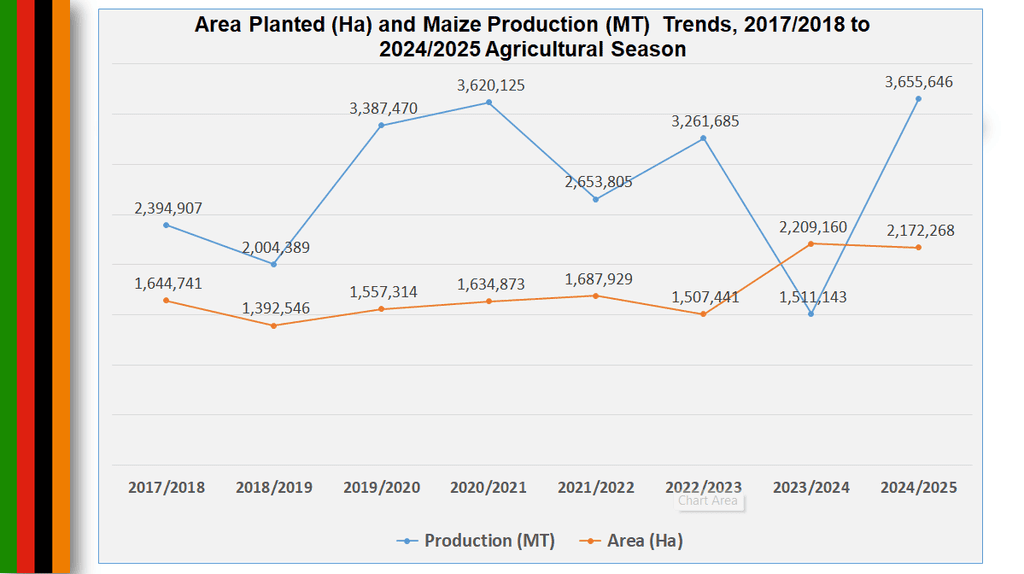
Data from the Zambia Statistics Agency (ZamStats) shows the relationship between the amount of land used for farming and maize production over the last eight years.
In the 2023-24 season, a severe drought hit the farming sector. Described as the worst drought Zambia has experienced in 40 years, the sharp drop in maize production despite increased land usage was severe. As a result, maize prices in the following 2024-25 season remained significantly higher than normal, showing how climate shocks have a long-term impact on food availability.
In response to these climate change effects, coupled with existing pressures linked to poverty, there are increasing rates of internal migration within Zambia.
The International Monetary Fund (IMF) notes that Zambia has taken steps in recent years to bolster climate resilience policy, including adoption of the Green Economy and Climate Change Act (2024) and updating the National Adaptation Plan (2023) with clear climate resilience priorities. However, the implementation of these reforms is likely to face delays as governmental oversight, technical capacity, and financing are lacking.
In addition to these setbacks, climate resilience policy is not currently informed by projected migration patterns within the country. If it were, policymakers could better target efforts to climate-affected communities, allocating limited resources to those areas.
Integrating data into policy can target vulnerable populations
The issue for policymakers is not the lack of available data, as organizations like the Global Centre for Climate Mobility and the International Organization for Migration (IOM) have robust data modeling on internal climate migration projections. Rather, the challenge lies in utilizing this data to target support to those affected by climate change and limit tension within the country.
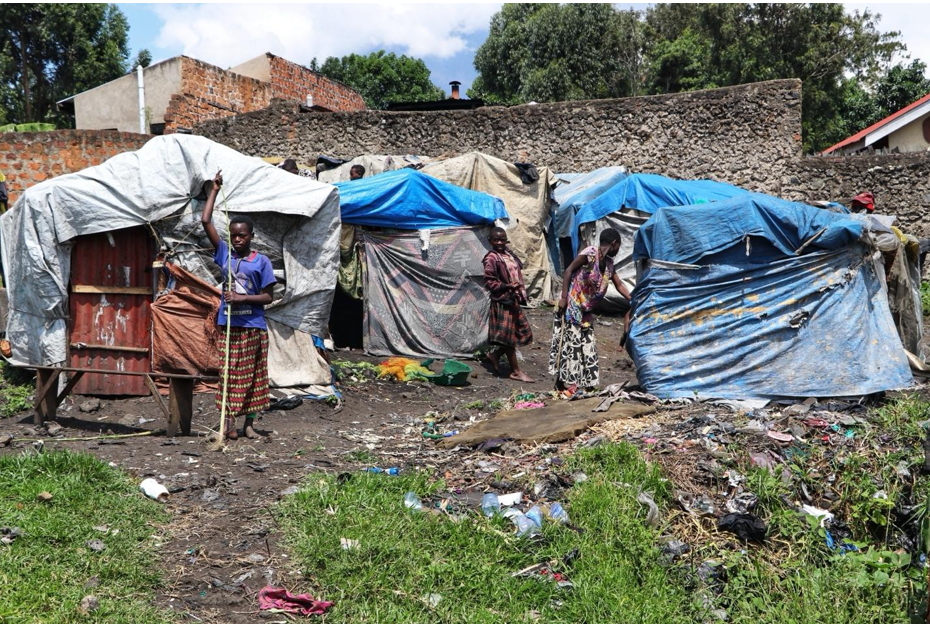
Take the country’s rural-urban split, for example. Although people are drawn to urban areas by the allure of job opportunities and economic advancement, when income from rain-fed crops and livestock diminishes, population movement can put additional pressure on urban environments. Large cities like Lusaka or Kitwe struggle to accommodate rapidly growing populations, and many end up in informal housing settlements without proper infrastructure.
Indeed, over the last two decades, informal settlements in Lusaka have almost tripled, with an estimated 1.4 million people, which is 62% of the city’s population. According to the International Federation of Red Cross and Red Crescent Societies (IFRC), rates of rural-urban migration are outpacing job creation in urban areas, leaving many Zambians without secure livelihoods or housing. This, in turn, has led to higher crime rates among youth in Lusaka.
Projections on migration to urban areas should be involved in urban planning. By understanding how many people a city can expect to accommodate in terms of housing and employment, local governments can support households in informal communities by providing basic infrastructure.
Inter-cultural tensions rise with rural-rural movement
Migration is a lifeline for many people. Without access to other support systems to sustain their households in the face of climate change and natural resource loss, rural-rural migration is the main avenue for survival for most rural households in Southern Africa. While some level of this migration is typical, increasing climate shocks will put more pressure on land resources and host communities.
One example, outlined by CGIAR, explains how many residents of southern Zambia, where drought is recurrent, have migrated into the central and northern regions seeking water security and farmland. Along with tribal differences, cultural practices of slash-and-burn land preparation have contributed to conflicts.
Inter-tribal interaction is on the rise and has been actively encouraged by the Zambian government since independence in 1964, with the unifying slogan “One Zambia, One Nation”. But as more people migrate into distant lands, traditionally inhabited by other groups, conflicts can arise as resource depletion creates competition.
Policymakers can address these tensions in host communities by funding targeted climate adaptation strategies. Effective climate resilience programs can include, for example, teaching communities about adaptation options through extension services, providing credit to smallholder farmers to finance implementation, and strengthening early warning systems for disaster risk reduction.
Trapped populations suffer without strong migrant networks
The hidden challenge of climate migration is the population unable to migrate. A study published by the National Institute of Health uses climate and census data in Zambia between 2000 and 2010 and concludes that climate-related immobility is most prevalent in economically insecure areas of Zambia because of the lack of existing migration networks. This produces a unique policy challenge. Policymakers must support climate migrants along with those who are forced to stay in unstable environments.
Policies for trapped populations should be designed to facilitate migration along with assistance with local adaptation. By using the same migration network data to identify areas with high levels of immobility, policymakers can support those who wish to migrate to support their families and reduce climate vulnerability, while also providing options for those who need to adapt to their circumstances.
Turning data into opportunity
As climate change continues to affect farmers in Zambia, the Zambian government has the opportunity to integrate climate migration data into policy to target at-risk populations. While challenging, this will require targeted climate programs for vulnerable communities, more informed urban planning, and localized migration resources for future migrants. If policymakers fail to better integrate data, finance and program implementation, Zambia will continue to face rising tensions across the country as climate shocks influence more internal migration.
This blog piece is part of a special series launched in the context of the work that Global Development Network (GDN) is carrying out in close partnership with the Center for Systems Solutions, and Future Earth US global hub, in support of the Belmont Forum’s Collaborative Research Action (CRA) on Integrated Approaches to Human Migration/Mobility.